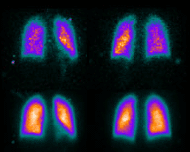
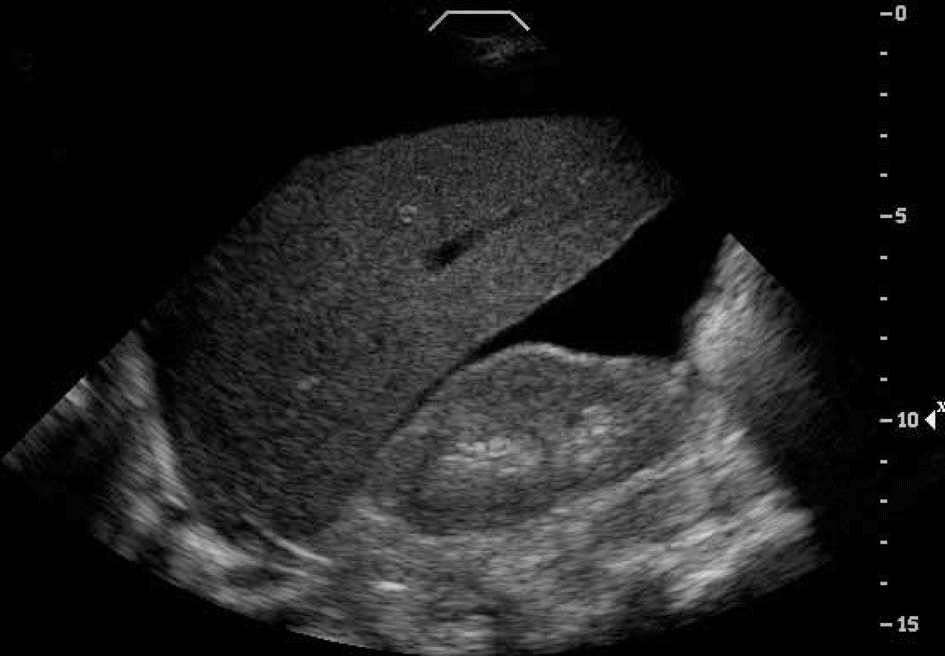
Pneumothorax, “Answers”

1. How good is CXR for detection of a pneumothorax? Ultrasound? When do you get a chest CT in someone you suspect may have a pneumothorax but has a negative CXR?

EML PTX AnswersThe sensitivity of a chest radiograph (CXR) for the detection of a pneumothorax (PTX) depends on how it is taken, with the upright posteroanterior (PA) film being a far better study than the supine x-ray.  Interestingly, there are no published studies comparing erect PA chest x-rays with CT as a gold standard. Ball, Kirkpatrick & Feliciano (2009) quote unpublished data that suggest upright PA films have a sensitivity of 92%. Other studies have shown sensitivity closer to 80-85% (Seow, 1996), including one from 1990 in which CT was compared to upright CXR as a non-inferiority trial for CT in detection of pneumothoraces (PTXs) after CT-guided thoracic biopsies (Murphy, 1990).   Not surprisingly, they found that CT was as good, and indeed a bit better (though not significantly more so) at detecting PTXs than conventional radiography which caught only about 84% of them.

Supine anteroposterior (AP) chest x-rays–the staple imaging study performed on trauma patients–are a notoriously poor imaging modality for the detection of PTXs. This is due to the tendency of air to track to the least dependent pleural recess, which in the supine patient is the anteromedial space. Though the deep sulcus and double diaphragm signs, among others, can provide clues to the presence of a PTX, they are not prevalent enough to make the supine film a reliable means of detecting a partially collapsed lung.  One review quotes sensitivities as low as 36-48% (Wilkerson, 2010), with even lower rates (24%) found when x-rays are interpreted by a trauma team (Ball, 2009) versus by radiologists.

At least one case report has suggested that oblique AP films may be used to aid in the diagnosis of a PTX in the supine trauma patient (Matsumoto, 2010). However, a modality being more rapidly accepted and adopted is ultrasound.  While there have been many retrospective studies done evaluating the sensitivity and specificity of ultrasound for this purpose, there have been fewer prospective, blinded studies done. Wilkerson et al. (2010) performed a review of related published literature in 2010 and found four RCTs that met specified criteria. The sensitivities of ultrasound reported in these studies were 86-98%, with specificities of 97-100%.  This compared with sensitivities and specificities of 28-75% and 100% respectively for supine AP chest radiographs. Similar results were found in a subsequent prospective single blinded convenience sample study, which found ultrasound to be 81% sensitive, while only 32% of PTXs were identified on the supine CXR (Nagarsheth, 2011).

There is no clean-cut answer as to when/whether to get a CT on a patient who has a negative chest x-ray. In part this is because there is much debate about the significance and management of “occult” PTXs–meaning those that are not visible on X-ray but are seen on CT. This topic will be addressed further in the next question. The British Thoracic Society’s Pleural Disease Guidelines of 2010 states that after a standard erect PA x-ray is taken, “if uncertainy exists, then CT scanning is highly desirable.” (Havelock, 2010).

Bottom line: Upright PA chest x-rays are good at detecting PTXs (~85% sensitive), supine AP films are poor (generally far less than 50% sensitive) and ultrasound is better than either (86-98% sensitive).  Whether to get a CT depends on your initial imaging modality combined with your clinical suspicion for a PTX (or other thoracic injury, as in the case of blunt trauma), as well as whether you think it would change your management of the patient.

2. How do you manage occult traumatic pneumothoraces? What if the patient requires mechanical ventilation?

An occult PTX (OPTX) is defined as one that is not suspected clinically and is not evident on plain films but is identified on CT scan.  The increased use of CT in trauma has led to a marked increase in the number of PTXs diagnosed (Plurad, 2007).  There is much debate about how to manage these. The argument for avoiding tube thoracostomies are the high complication rate (~22%) of the procedure as well as longer associated hospital and ICU stays. Aggressive treatment, on the contrary, may prevent a worsening PTX and the development of a tension PTX.

Advanced Trauma Life Support (ATLS) guidelines state “Any PTX is best treated with a chest tube . . . Observation and aspiration of an asymptomatic PTX may be appropriate, but the choice should be made by a qualified doctor; otherwise, placement of a chest tube should be performed.” An increasing number of studies (both retrospective reviews and prospective RCTs) argue against invasive interventions for OPTX, favoring observation for signs of clinical progression. These studies note a non-significant difference in the progression of OPTX, incidence of pneumonia, and mortality between those with and without thoracostomies.

Supporting this view is a review and analysis of the related RCTs which concluded that observation may be at least as safe and effective as the placement of chest tubes for the management of the occult PTX (Yadav, 2010).  Other reviews of current pertinent literature found that it appears safe to observe patients with small to moderate PTXs (Ball, 2009; Mowery, 2011). Unfortunately, most of the available studies and trials have small sample sizes and are typically only Level III evidence. Ideally, the treatment course would be dictated by the ability to predict which OPTX will remain stable and resolve and which will progress; however, no study has been prospectively validated to accomplish this.

While there seems to be increasing agreement in managing small to medium-sized PTXs with observation, there is less consensus on what to do with the occult PTX in a ventilated patient.  ALTS guidelines state that all patients with PTXs who are undergoing positive pressure ventilation (PPV) should have chest tubes placed (PPV theoretically can turn a small PTX into a tension PTX). However, the evidence is mixed.  Two out of three small randomized control trials reviewed by Yadav, et al. (2010) found no difference in outcomes for patients with OPTX who had PPV. The third (Enderson, 1993) found a higher rate of complications, including tension PTXs, in vented patients.  However, recent practice guidelines published in the Journal of Trauma concluded from the same evidence that the studies “would support the notion that the majority of patients with occult pneumothoraces will not have progression regardless of the presence of positive pressure ventilation” (Mowery, 2011). This sentiment seems to be supported by a growing body of retrospective and prospective studies (Barrios, 2008; Mahmood, 2011).

3. In patients with a primary spontaneous pneumothorax, do you automatically place a chest tube? When might you consider a pigtail catheter or even simple needle aspiration?

Historically, most PTXs, including primary spontaneous pneumothoraces (PSPs) were treated with large bore (>24F, as defined by the American College of Chest Physicians) chest tubes.  Current recommendations regarding their management are changing based on emerging evidence that more conservative measures such as small-bore catheters (<14F), needle aspiration, or even observation are reasonable and possibly even preferable. When weighing the various approaches, one must consider several factors including: patient stability, whether this is an initial or recurrent PTX, size of the PTX, efficacy of the procedure as well as associated pain/discomfort, complications, likelihood of initial success of the procedure, and likelihood of recurrence of the PTX.

For this discussion, we will take the case of a hemodynamically stable patient with a first occurrence of PTX that is large enough to require intervention.  It is generally accepted that in the stable patient with a first episode of a small PTX, observation and outpatient management (assuming no progression after observation) is appropriate (Baumann, 2001; Macduff, 2010). “Small” is defined variably by different groups. The American College of Chest Physicians defines it as less than 3cm apex-to-cupola distance (Baumann, 2001), whereas the British Thoracic Society defines it as >2cm interpleural distance at the level of the hilum (Macduff, 2010).

The American College of Chest Physicians 2001 Delphi Consensus statement on the management of spontaneous PTXs recommends either chest tube or pleural catheter for large PTXs. They state that there is no role for aspiration except possibly in the situation of a small PTX that has progressed during an observation period in an otherwise stable patient (Baumann, 2001). On the other end of the spectrum is the British Thoracic Society (BTS) whose 2003 guidelines recommended simple aspiration as the first line treatment of “all primary pneumothoraces requiring intervention” (Henry, 2003). The 2010 update of the BTS guidelines takes a slightly more nuanced approach stating that while they believe that needle aspiration remains the procedure of first choice in most cases, they also recommend taking into account operator experience and patient choice when deciding on an approach (MacDuff, 2010).

These differences are in part a result of timing of the guidelines and partly due to the paucity of relevant data. There are few retrospective studies and even fewer well-powered and methodologically-sound randomized controlled trials comparing any two–let alone all three–of the modalities being considered here. The most studied comparison is that between needle aspiration and large bore chest tube placement which boasts four RCTs: Noppen, 2002; Ayed, 2006; Harvey, 1994; Andrivet, 1995. Comparatively, there is only one small RCT comparing small bore catheters with aspiration and no RCTs comparing small-bore with large bore chest tubes (although there is an observational study (Inaba, 2012) of chest tubes in trauma that found no difference between small versus large).  Additionally, there are four systematic reviews analyzing the four aspiration versus large bore chest tubes RCTs previously mentioned (Zehtabchi, 2008; Wakai, 2007; Aguinalde, 2010; Devanand, 2004).

The available randomized controlled trials comparing aspiration with tube thoracostomy evaluated both immediate and delayed (one week – 1+ years) success rates of each modality for treatment of spontaneous PTXs of all sizes. Immediate success rates were found to be fairly similar between the two, with aspiration succeeding from 59.3%-71% of the time across the four trials, and tube placement being effective 63.6%, 68% and 93% of the time, respectively, in the three studies that reported it (Noppen, Ayed, Andrivet). The high outlier was likely due to the generous definition of success used for tube placement in Andrivet’s trial: a tube only failed if there was a persistent leak after 10 days. One year recurrence rates were not significantly different between needle aspiration and chest tubes (~ 25%) (Noppen, Ayed, Harvey). Reported complication rates for aspiration were generally equal to or lower than that of tube placement, ranging from 0-2%. Patients with aspiration had a significantly lower admission rate (Noppen, Ayed), and either a significantly shorter hospital stay or a trend towards it (Noppen, Ayed, Harvey). They also had lower analgesic requirements and pain scores (Ayed, Harvey).

All these trials suffered from low numbers, with the largest including 137 patients (Ayed). Taken together, they included just 331 randomized patients. Nonetheless, all studies came to the conclusion that simple aspiration was an acceptable, and perhaps even preferred, first line approach to primary PTXs. The systematic reviews that evaluated these studies found there to be insufficient efficacy data to be conclusive, but that the pooled data suggest that there is no significant difference between aspiration and tube thoracostomy in terms of immediate and one-week outcomes or with respect to recurrence rates at one year. They also found that there was a significantly lower admission rate and length of hospital stay among patients who had needle aspiration.  They concluded that simple aspiration was a reasonable alternative and possibly preferred strategy in the initial management of primary spontaneous PTXs requiring intervention(Zehtabchi, 2008; Wakai, 2007; Aguinalde, 2010; Devanand, 2004).

But, what of pigtail catheters? The question of whether and when to use small-bore catheters is addressed mostly by retrospective studies. Several such studies found that small-bore catheters (these included pigtail catheters, standard small bore pleural catheters, and single lumen central venous catheters) were no less effective than large bore chest tubes in the treatment of spontaneous PTXs (Vedam, 2003; Liu, 2003; Contou, 2012; Kulvatunyou, 2011). One small RCT out of Singapore that compared small-bore catheters to aspiration found a non-significant trend towards decreased admissions (from ED or from 3-day outpatient re-evaluation) with the catheters (44%) than with aspiration (61%). There was no significant difference in failure rates, complication rates, or pain scores. The study concluded that both methods allowed for safe management of PSPs. Of note, the study included only 48 patients, having failed to reach their target of 100 due to poor recruitment and lack of funding (Ho, 2001).

Bottom Line: Despite the lack of large RCTs, the data from the existing trials and retrospective studies support using either needle aspiration or small bore catheters (especially those with a Heimlich valve which allow the patient to move about or even be discharged with it in place) in lieu of large bore chest tubes in the stable patients with first-time moderate-to-large spontaneous PTXs. There is insufficient data to recommend aspiration versus a small bore tube at this time. Factors associated with failure of aspiration include: patient age > 50, initial aspiration volume > 2.5 L (this suggests a pleural leak), and possibly initial PTX size (some studies have shown higher failure rates with PTX size > 40% as measured on CXR, but this is an actively debated risk factor) (Chan, 2008).

Reflecting these guidelines is a flowchart for managing the spontaneous pneumothorax, taken from the BTS 2010 guidelines (Macduff, 2010).

4. When do you do a needle thoracostomy?  Where do you prefer to put the needle?

Needle thoracostomy is indicated when life-threatening tension PTX is suspected. Traditionally, the recommended method for decompressing such a PTX has been to place a standard 5-cm long over-the-needle catheter into the pleural space at the level of the second intercostal space in the mid-clavicular line (ATLS). However, some have expressed concern that this location may not be optimal for reasons both of safety and likelihood for success.

Safety concerns relate to the proximity of major vessels such as the internal mammary artery (IMA) and the subclavian vessels to the traditional needle thoracostomy site.  As noted above in Question #3, exceedingly few complications were found in all the RCTs that studied needle aspiration (all of which were performed at the 2nd or 3rd intercostal space (IS) at the mid-clavicular line (MCL)). However, one group reported three cases of life-threatening hemorrhage that occurred in a six-month period in patients who had had a needle thoracostomy performed in the 2nd intercostal space, mid-clavicular line (Rawlins, 2003).  Consequently, they propose that the traditional location for tube thoracostomies–the 5th intercostal space just anterior to the mid-axillary line–may be safer  for needle decompression as it is farther from large vascular structures (Rawlins, 2003).

Concerns about the efficacy of decompressing a PTX using the traditional method relate to the thickness of the chest wall at the level of the 2nd intercostal space. CT scans demonstrate a chest wall thickness between 4 and 4.5 cm thick at the 2nd intercostal space, mid-clavicular line. The corresponding expected failure rate of penetrating the pleura with a 5cm needle was found be as high as 50%. (Stevens 2009; Givens 2004; Zengerink 2008; Sanchez 2011). All of these studies conclude that a longer needle is likely necessary to increase chances of success at needle thoracostomy, while also acknowledging the associated increased risk of damaging internal structures.

So, is a lateral approach better, given these safety concerns and a potentially high failure rate of the anterior approach? A few studies have addressed this question with conflicting results.

Two imaging-based studies evaluated the chest thickness not only of the anterior wall, but also that of the lateral wall, at the 5th intercostal space along the mid-axillary line (Wax, 2007; Sanchez 2011). Both of these studies found that the chest wall thickness was thinner anteriorly (averaging 3.1cm and 4.6cm in the respective studies) than at the mid-axillary line (3.5cm and ~5.3 cm, respectively), thus making the former a better location for needle thoracostomy.  Wax, et al. (2007) also evaluated the distance from these entry sites to key internal structures such as the heart and liver, as well as the distance from the anterior approach to the internal mammary arteries. They concluded that the anterior approach was safest based on its relatively greater distance from key organs and on its sufficient distance from the IMA (>3cm). Both studies recommended using a 7cm needle for increased success rate at penetrating the pleura.

A countering opinion was rendered by Inaba, et al. (2011) based on a cadaveric study in which they performed needle thoracostomies at both the 2nd IS MCL and 5th IS MAL in both right and left chest walls of twenty un-enbalmed cadavers.  After having placed the catheters, bilateral thoracotomies were performed to assess penetration into the pleural cavity. They found that 100% of those placed laterally at the 5th intercostal space were successful, versus only 58% of those placed anteriorly at the 2nd intercostal space. They also measured the chest wall thicknesses and found the lateral wall (3.5cm +/- 0.9cm) to be significantly thinner than the anterior wall (4.5cm +/- 1.1cm) (Inaba, 2011).

The reasons for these differing measurements and results are not immediately clear. One possible explanation is that while the exact ages of the cadavers in Inaba, et al.’s study were not known, they were stated to be “higher than the average trauma cohort” and “their muscle mass may have been more atrophic.” Perhaps this changed the relative thicknesses of the various  parts of the chest. Another plausible explanation is that the wall thickness along the lateral wall may vary appreciably within relatively small distances.  Wax, et al. found that the chest wall thickness along the 5th intercostal space was 3.5 cm at the mid-axillary line but only 2.9cm at the anterior axillary line. This dramatic difference in a short distance may well account for variances in relative chest wall thickness measurements and in success rates in pleural penetration in the cadaver study.

Bottom line: There is ample data demonstrating that either approach to needle thoracostomy may fail when using a standard sized needle.  The answer to improving efficacy of needle decompression may lie in using longer needles and catheters, keeping in mind that this increased length will increase risk of damaging other internal structures. Prospective studies are clearly warranted to further study this question, until which time it may well be advisable to use the more traditional anterior approach, especially if using a longer-than-standard needle.
Posted in Uncategorized | Tagged , , | 2 Comments

Pneumothorax, Questions

1. What is your first line imaging test to diagnose pneumothorax (PTX)? When do you get a CT?

EML Pneumothorax Questions2. How do you manage traumatic pneumothoraces found incidentally on CT (i.e., not clinically apparent, not on CXR)?  What if the patient requires mechanical ventilation?

3. In patients with a primary, spontaneous PTX do you place a chest tube? When do you consider a “pigtail” catheter or needle aspiration?


4. When do you do a needle thoracostomy? Where do you put the needle?

EML Pneumothorax Questions Poster

Posted in Uncategorized | Tagged , , | Leave a comment

Pulmonary Embolism, “Answers”

1. What decision rules do you use to determine if a patient is low or very low risk for PE?

The most commonly used decision instruments for risk stratification are the Wells’ score, Geneva score, and PERC rule. Additional tools include the Kline rule and the Pisa model, but these are less utilized.

EML PE AnswersThe Wells score is a scoring system consisting of 7 criteria, to be used in conjunction with d-dimer. It assigns patients a risk of low, moderate, or high based on the total points. In low-risk patients, a negative d-dimer is sufficient to rule out PE without further testing. One of the initial validation studies found a negative predictive value of 99.5% for this group . One major weakness of Wells’ is that one of the highest weighted criteria, “an alternative diagnosis is less likely than PE,” is a very subjective measure; however, use of Wells’ has repeatedly been validated (Wolf, 2004).

The original Geneva score was a similar scoring system comprised of 8 variables that was well-validated but limited by its reliance on lab and imaging interpretation (blood gas and chest x-ray). Therefore it was revised to only include risk factors, signs, and symptoms. The Revised Geneva score (RGS) still consists of 8 variables, and like the Wells’ score, stratifies patients into low, moderate, or high risk. There is also a Simplified Revised Geneva score (sRGS) that assigns points uniformly for each variable rather than assigning different weights (Fesmire, 2011).

Both Wells’ and the sRGS can alternatively be subject to a dichotomous interpretation of PE likely or PE unlikely. Wells’ was used in this way by the Christopher Study Investigators when they demonstrated the safety of a simple algorithm involving d-dimer for patients deemed PE unlikely versus CT for patients deemed PE likely. Of those who were PE unlikely and had a negative d-dimer, 0.5% ultimately had a venous thromboembolism (VTE) at 3-months (Christopher, 2006).

Any discussion of decision rules warrants mention of clinical gestalt and how it compares to validated criteria in assessing the pretest probability of PE. The PIOPED study was the first to corroborate the use of gestalt. Since then, a number of comparative studies (Sanson, 2000; Runyon, 2005) have found that gestalt and objective criteria such as Wells’ perform equally well. This premise was also supported by a recent meta-analysis of 52 studies estimating sensitivity and specificity for gestalt and/or a decision rule. The results are summarized here:

Decision Tool Sensitivity (%) Specificity (%)
Clinical gestalt 85 51
Wells’ (traditional) 84 58
Wells’ (alternative) 60 80
Revised Geneva 91 37

Among the 52 studies included there was significant heterogeneity of results, which was related to differing prevalences of PE (Lucassen, 2011).

The Pulmonary Embolism Rule-out Criteria (PERC) can be used to exclude the diagnosis of PE in patients who are deemed low risk.  It is critically important to recognize that the clinician must first decide that the patient is low risk for PE based on clinical gestalt before applying PERC.  This criteria was derived by Kline, et al., in 2004. Using a multi-center cohort of over 3,000 patients, the investigators collected data on 21 variables related to the diagnosis of PE. Then, by logistic regression and stepwise backwards elimination, they narrowed down the criteria to 8 variables that could be used in a block rule to justify not ordering a d-dimer if all questions are answered “no.” They internally validated the rule in a low-risk group and found a sensitivity of 96%. Of the 362 patients who were PERC negative, 5 (1.4%) were later diagnosed with VTE. This miss rate fell under the predetermined test threshold of 1.8%, a point of equipoise below which there is a greater chance of harm than benefit by proceeding with further testing.

Kline, et al., performed a large validation study in 2008, in which they sought to validate the premise that being both low-risk by gestalt (estimated risk <15%)  and PERC negative renders patients very low-risk. This categorization would signify that they should have a pretest probability lower than the test threshold and therefore not benefit from further testing. Their study identified 1666 patients who were gestalt low-risk and PERC negative. In this group, 16 (1%) had VTE or death within 45 days. The sensitivity of this very low-risk classification was 97.4% (Kline, 2008).

When the authors applied PERC to the entire study population without gestalt interpretation, they found that the false negative rate would be unacceptably high if the population’s pretest probability was >6%.  As most populations have a prevalence higher than this, the authors comment that this highlights the importance of risk stratification prior to application of PERC so that the pretest probability is sufficiently low.

PERC has been repeatedly validated. A 2012 systematic review and meta-analysis by Singh, which included 12 studies and nearly 15,000 patients in 6 countries, concluded that “because of the high sensitivity and low negative likelihood ratio, PERC rule can be used confidently in clinically low probability population settings” (Singh, 2012).

2. Are there any situations in which you modify the d-dimer threshold for ruling out PE? If so, when?

D-dimer testing has become standard practice for ruling out PE in low-risk patients due to its high sensitivity. But it is also known to lack specificity and lead to a high number of false positives. The result is an obligation to pursue the diagnosis of PE with CT pulmonary angiogram (CTPA), which poses a risk of contrast-induced nephropathy (CIN) and radiation-induced malignancy. Green and Yealy claim that 1 contrast-induced renal failure will result from every 200 CTs and that 1 radiation-induced cancer will result from every 2,000 CTs. They also assert that half of both types of adverse effects will ultimately be fatal (Green, 2012).

A wide range of data has been reported regarding the incidence rates of these sequelae, but regardless of how heavily one weighs the data, it is evident that unnecessary CTs do carry the potential for adverse consequences. In order to reduce harm, some have suggested that d-dimer not be regarded as a “one size fits all” test.

A 2009 study examined the use of d-dimer at different thresholds that varied according to pretest probability. The authors proposed doubling the threshold for low-risk patients and cutting the threshold in half for high-risk patients. Overall they found that doubling the threshold in low-risk patients increased d-dimer specificity from 58% to 75%, but decreased sensitivity from 94% to 88%. They estimated that this would result in 15% fewer imaging studies but 3-4 additional missed PEs per 1000 patients (Kabrhel, 2009). Their data did not support use of d-dimer at any threshold in high-risk patients.

Kline has also suggested doubling the d-dimer threshold in certain groups of patients in an effort to increase the test’s specificity.  He and his colleagues recently published a study investigating the effect of doubling the threshold on exclusion and miss rates. This was a multicenter prospective trial. All enrolled patients had a pretest probability calculated using Wells’ or RGS, a d-dimer measured, and a confirmatory CTPA performed upon enrollment as well as at 30-day follow-up.

They found two groups in which doubling the d-dimer threshold yielded a significantly increased exclusion rate with only a slight increase in the rate of missed PE. The first group was those deemed to have a pre-test probability of “PE unlikely” as defined by Wells’ less than or equal to 4 or RGS less than or equal to 6. In these patients, the exclusion rate doubled from about 16% to 32% when the d-dimer threshold was doubled.  The PE miss rate increased from about 3.7% to 5.4%. Almost all of these missed PEs were isolated, sub-segmental PEs and none of these patients had concomitant DVT. (The implication that sub-segmental PEs are of less clinical consequence than segmental PEs is still highly controversial).

The other group of patients for which d-dimer could safely be doubled was those over 70 years of age. D-dimer is known to increase with age and this phenomenon was seen when d-dimer was plotted against age for the 552 patients in this study without PE. The slope of the curve increases most sharply around age 70. When the investigators systematically examined 8 different d-dimer thresholds for 4 different age groups, they found that doubling the threshold after age 70 resulted in an increased rule out rate without an increase in post-test probability of PE.

Looking more closely at the implications of this change in d-dimer threshold, the authors found that out of the 224 patients who had a creatinine measured before and after CTPA, 37 developed CIN. Of these 37 cases, 10 could have been prevented by using the doubled d-dimer threshold to rule out PE (Kline, 2012).

The 2012 study did not provide any results about d-dimer in pregnancy, possibly due to the protocol’s nondiscriminatory use of CT, but pregnancy is known to increase d-dimer and confound interpretation. In a small study in 2005, Kline, et al., sought to define the magnitude of increase in d-dimer during pregnancy by employing women seeking to conceive and following them through pregnancy. They found that the percent of women with a d-dimer within normal limits was 79% pre-conception, 50% in the 1st trimester, 23% during the 2nd trimester, 0% during the 3rd trimester, and 69% 4 weeks post-partum. They concluded that normal pregnancy will cause an elevated d-dimer and that the threshold should therefore be adjusted according to trimester (Kline, 2005).

3. To which patients do you give thrombolytics for PE?

Compared to indications for thrombolytics in MI or ischemic stroke, indications remain less established and more controversial in PE. Quite recently, however, ACEP, the AHA and Chest have all published updated guidelines which are relatively in agreement. At this point it is fair to say that all patients with massive PE should receive thrombolytics (unless they have a contraindication or the risks outweigh the potential benefits), and that thrombolytics should be considered on a case-by-case basis in patients with sub-massive PE.

What do the terms massive and submassive PE mean? Massive PE was previously defined by anatomical criteria: >50% obstruction of pulmonary vasculature or occlusion of 2 or more lobar arteries. It is now more commonly defined by hemodynamic instability, which is a function of both embolus size and underlying cardiopulmonary status.  As such, a sub-massive embolus in a patient with poor cardiopulmonary reserve could produce similar outcomes to a massive embolus in a patient without prior cardiopulmonary disease.  Therefore, any combination of angiographic obstruction and cardiopulmonary function that causes hemodynamic decompensation qualifies as massive PE (Wood, 2002).

The AHA’s 2011 guidelines give more concrete definitions. Massive PE requires one of the following:

  • sustained hypotension (systolic <90 for >15min or the need for inotropes)
  • pulselessness
  • profound bradycardia

Sub-massive PE is characterized by normal BP but evidence of either:

  • RV dysfunction (RV dilation, elevated BNP, suggestive EKG changes)
  • myocardial necrosis (elevated troponin)

What is the evidence for thrombolytics? What we know about thrombolytics in PE is that at 24 hours they achieve reduced pulmonary artery pressures, increased pulmonary perfusion, and decreased RV dysfunction (Jaff, 2011). How this more rapid angiographic resolution of PE translates to overall outcomes is less certain. There is a paucity of high quality studies specifically looking at thrombolytics compared to heparin alone in patients with massive PE. A 2004 meta-analysis showed a 4% vs. 7% rate of recurrent PE and a 6% vs. 13% rate of  death, respectively, for thrombolytics vs. heparin alone in massive PE (Wan, 2004). In cases of sub-massive PE, the jury is still out. No study has shown lower mortality in these patients who receive thrombolytics, but small studies, including one from the MOPETT trial, published in January 2013, have suggested that thrombolytics in some of these patients may decrease the risk of future CHF and pulmonary hypertension. Whether this is true, the effects on overall mortality, and the appropriate dose for sub-masive PE are still unclear.

However, the risks of thrombolytic therapy should not be underestimated. In the ICOPER registry, intracranial bleeding occurred in 3% of patients who received thrombolytics versus 0.3% of those who did not. The incidence of any major bleeding was 22% versus 9% in these groups (Goldhaber 1999). Absolute and relative contraindications to thrombolysis are the same as for MI. For patients in whom thrombolytics are contraindicated, or who remain hemodynamically unstable despite medical treatment, surgical or catheter embolectomy may be indicated.

Just as in MI and ischemic stroke, there is a “golden hour” in severe PE. In fatal cases of PE, two-thirds of patients die within 1 hour of presentation. Furthermore, thrombolytics are thought to be more effective in achieving reperfusion when administered early (Wood, 2002).

4. When, if ever, do you discharge a patient diagnosed with PE?

Standard treatment for PE has traditionally been inpatient-based and centered upon unfractionated or low molecular weight heparin (LMWH) bridged to a vitamin K antagonist. The down sides to this protocol include the resources and cost of hospital admission, frequent injections, multiple medications, and the need for extended lab monitoring. Therefore, there has been much research into whether outpatient treatment, and possibly even outpatient treatment with oral medication, is a viable option.

In 2010, one prospective and two retrospective studies published in the Journal of Thombosis and Haemostasis looked at outpatient treatment with LMWH for hemodynamically stable patients without significant comorbidities. All three found that outpatient treatment was safe and effective in this population (Agterof, 2010; Erkens, 2010; Kovacs, 2010).

In 2011, Aujesky, et al., conducted the first multicenter, prospective, randomized, non-inferiority trial comparing outpatient and inpatient treatment, both with LMWH. All enrolled patients were deemed to have a low risk of death (PESI class I or II; see below for more on this index). For outpatient and inpatient groups, respectively, rates of 90-day recurrent VTE were 0.6% and 0%; rates of 90-day major bleeding were 1.8% and 0%; rates of mortality were 0.6% in both groups. 14% of outpatients would have preferred to stay longer in the hospital. 29% of inpatients would have preferred early treatment at home. The conclusion made by the authors is that for select low-risk patients who prefer early discharge, outpatient treatment is a safe and effective option.

Are there any decision tools that can help determine which patients may be safe for outpatient treatment? The Aujesky study used the pulmonary embolism severity index, or PESI. The PESI is a prognostic model designed to risk stratify patients with acute PE according to estimated 30-day all cause mortality. It is the most accurate and easiest to use PE prognostic score. It consists of 11 variables that are given differing weight. The total score places patients into one of five severity categories, each with a discrete mortality risk. The more recently derived Simplified PESI (sPESI) consists of 6 variables. If all are negative, the patient is low-risk. If any are positive, the patient is high risk.

Erkens, et al., sought to determine if the original and sPESI could be used to accurately characterize which low-risk patients are appropriate for outpatient treatment. From their study they concluded that both models were accurate in identifying these patients; however, many high-risk patients were also treated as outpatients, without adverse outcomes. More research is clearly needed to further elucidate outpatient eligibility and outcomes (Erkens, 2012).

Troponin and brain natriuretic peptide (BNP) have also been investigated as markers of increased disease severity.  The latter has shown a positive correlation, but lacks specificity.  Church and Tichauer, in their review of ED management of PE, recommend using troponin, in conjunction with sPESI and focused echocardiography, to further risk stratify patients with PE (Church, 2012).

Posted in Uncategorized | Tagged | 2 Comments

Pulmonary Embolism, Questions

1. Which decision rule(s) do you use to determine if a patient is low or very low risk for PE?EML PE Questions

2. Are there any situations in which you modify the d-dimer threshold for ruling out PE? If so, when?

3. To which patients do you give thrombolytics for PE?

4. When, if ever, do you discharge a patient diagnosed with PE?

PE Questions Poster

Posted in Uncategorized | Tagged , , , | 2 Comments

Burns, “Answers”

The traditional classification of burns as first, second or third degree is being replaced by the designations of superficial, superficial partial thickness, deep partial thickness, and full thickness. Burn depth has an impact on healing time, the need for hospitalization, surgical intervention, and the potential for scar development. Although accurate classification is not always possible initially, the causes and physical characteristics of burns are helpful in categorizing their depth (Hettiaratchy, 2004).

“Few areas in medicine are fraught with as much mysticism, personal bias, and unscientific dogma as the care of the minor burn wound.”—Roberts and Hedges, 2009

EML burn answers

1. When (if ever) do you open blisters in acute burns?

Although there are many strong feelings about the answer to this question amongst emergency physicians and burn specialists, there is a paucity of in vivo evidence related to this subject. Most of the debate circles around articles from lab models and from clinical studies done generations ago. Based on the best, currently available evidence, blisters should generally be left intact, to reduce the risk of infection. Occasionally it is necessary to intervene for functional purposes. Aspiration is generally considered less painful than unroofing (Shaw, 2006).

In one study (a controlled study of 202 patients with partial thickness burns), the infection rate was lower in patients with intact blisters, compared to patients who underwent needle aspiration or de-roofing. However, aspiration significantly reduced pain in 37% of patients with partial thickness burns, compared with 0% in the de-roofing group. This study was not randomized, and was not blinded (Swain, 1987).

A review of the literature by Flanagan and Graham concluded that small blisters should initially be left intact, but then concluded that as a general rule blisters should be debrided (see how conflicted this literature is?) (2001). Some commentators determine the length of time to leave blisters intact by age and location, such as blisters on the palm of the hand and sole of the foot in children should be left intact for 48 hours (Morgan, 2000).  Roberts and Hedges, however, recommend that blisters should be left intact on the initial visit (Fifth edition).

Morgan, et al., recommend that only ruptured blisters should be debrided. If blisters contain cloudy fluid or are likely to rupture imminently they should be unroofed. They recommend that intact blisters not be ruptured because of the increased risk of infection. When a blister persists for several weeks, it typically indicates the presence of an underlying deep partial or full thickness burn (Morgan, 2000). These patients should have close follow up. Tar and asphalt should not be debrided. Cool water, mineral oil, and polymyxin-B or bacitracin can emulsify and remove tar. Clothing or other materials should be removed using standard irrigation techniques.

Dead skin of open blisters should be removed, but the yellow eschar of partial-thickness burns need not be removed (Benson, 2006). Most burn blisters will rupture spontaneously if they are not aspirated. At this time all non-adherent devitalized tissue needs to be debrided.  If a patient with a blister from a burn returns a second time to the emergency department, this blister and tissue should be debrided, especially if it appears infected (Roberts and Hedges, 2009). They recommend using a large 10 X 10 cm gauze pad to rub over the blister, and to avoid long meticulous procedures with scissors or other instruments.

It appears there is currently no right or wrong answer to this question. Our practice is to approach this on a case-by-case basis, and to consider location. A large blister on the hand is likely to be very uncomfortable, and aspirating or unroofing may provide relief. However, a blister on the forearm may not bother the patient and removal of the epidermis may be more painful and increase the risk of infection.

2. When do you transfer patients directly to a burn center versus outpatient follow up? How do you arrange that follow up and for when (i.e., do you call the burn place and make a time? Is it for the next day, a week, etc.?)?

There are multiple algorithms on how to determine disposition for an acute burn. The National Burn Care review has divided burns into complex burns (those that require specialist intervention) and non-complex burns (those that do not require immediate admission to a specialist unit), and recommends contacting your nearest burn center with any questions regarding the complexity level of a burn.

A burn injury is more likely to be complex if it is associated with: extremes of age (younger than 5 or over 60); burns to the face, hands, perineum, feet (partial or full thickness); any area of flexure (especially the neck or axilla); circumferential partial or full thickness burn of limb, torso or neck; chemical burn > 5% of total body surface area; exposure to ionizing radiation; high pressure steam injury; high tension electrical injury; hydrofluoric acid burn >1% of total body surface area; suspicion of non-accidental injury; or partial of full thickness burn > 5% total body surface area in children and >10% of total body surface area in adults. Patients with coexisting serious medical conditions (cardiac history, immunosuppression, pregnancy, renal insufficiency) should also be referred to a burn center (Hettiaratchy, 2004).

The American Burn Association has produced a table to assist with disposition.

American Burn Association’s Grading System for Burn Severity and Disposition of Patients


  Type of burn
  Minor Moderate Major
Criteria: < 10 percent TBSA burn in adult

< 5 percent TBSA burn in young or old

< 2 percent full-thickness burn

10 to 20 percent TBSA burn in adult5 to 10 percent TBSA burn in young or old2 to 5 percent full-thickness burn

High-voltage injury

Suspected inhalation injury

Circumferential burn

Concomitant medical problem predisposing the patient to infection (e.g., diabetes, sickle cell disease)

> 20 percent TBSA burn in adult> 10 percent TBSA burn in young or old> 5 percent full-thickness burn

High-voltage burn

Known inhalation injury

Any significant burn to face, eyes, ears, genitalia or joints

Significant associated injuries (e.g., fracture, other major trauma)

Disposition: Outpatient management Hospital admission Referral to burn center

Burn = partial-thickness or full-thickness burn, unless specified; TBSA = total percentage of body surface area affected by the injury; young = patient younger than 10 years of age; adult = patient 10 to 50 years of age; old = patient older than 50 years of age (Herndon, 2007)

Burn Center Referral Criteria excerpted from the American Burn Association:

1. Partial thickness burns greater than 10% of total body surface area (TBSA).

2. Burns that involve the face, hands, feet, genitalia, perineum, or major joints.

3. Third degree burns in any age group.

4. Electrical burns, including lightning injury.

5. Chemical burns.

6. Inhalation injury.

7. Burn injury in patients with pre-existing medical disorders that could complicate management, prolong recovery, or affect mortality.

8. Any patient with burns and concomitant trauma (such as fractures) in which the burn injury poses the greatest risk of morbidity or mortality. In such cases, if the trauma poses the greater immediate risk, the patient may be initially stabilized in a trauma center before being transferred to a burn unit. Physician judgment will be necessary in such situations and should be in concert with the regional medical control plan and triage protocols.

9. Burned children in hospitals without qualified personnel or equipment for the care of children.

10. Burn injury in patients who will require special social, emotional, or rehabilitative intervention.

(Committee on Trauma, American College of Surgeons, 2006)

It is essential to note that, at least in the United States, burn center beds are at a premium, with decreases in the number of available beds and funding in recent decades. Burn surgeons may refuse transfers simply because there are not enough of these specialty beds. This is not unreasonable for many burns. Most burns generally require daily dressing changes, debridement, pain control, and hydration. Within the community of burn surgeons there is increasing discussion about the necessity of the current number of transfers to a burn center, with one series finding that only 31% of transferred patients required surgical intervention (Vercruysse, 2011). Telemedicine and photos taken by mobile phones may allow better assessment of necessity of a transfer to a burn unit by a burn specialist (Shokrollahi, 2007).

Superficial burns usually do not need specialist follow up. However, for extensive superficial burns consider follow up with a primary care physician within 3 to 5 days. Superficial partial thickness and deep partial thickness burns should be seen within 3-5 days if they do not meet criteria for admission. Deep thickness burns and partial thickness burns to the hands and face should be seen within 48 hours if they do not require admission. Full thickness burns that do not meet admission criteria, unless less than 2 cm, should be seen by a burn specialist within 3-5 days (Waitzman, 1993). Full-thickness burns less than 2 cm wide can be allowed to heal by contracture as long as they are in non-functional, non-cosmetic areas and the skin is not thin (e.g., the ankle) (Morgan, 2000).

eml burn answers 2

3. What topical medications should you put on burns, and which ones do you avoid?

Superficial burns: Patients should be instructed to keep the wound clean and apply moisturizer. They do not require topical antibiotic ointment; the wound will heal regardless. Patients should use non-perfumed moisturizing cream (e.g., Vaseline Intensive Care, Eucerin, Nivea, mineral oil, or cocoa butter) until natural lubricating mechanisms return. High lanolin content lotions, thick waxes, and ointments should be avoided.  Sun block should be used continuously upwards of one to two years until healed completely (Morgan, 2000).

Partial thickness burns: Topical antimicrobials are soothing for minor burns. By prescribing daily use of topical antimicrobials, the patient is reminded  to look at the wound, perform dressing changes, and become involved in his or her care. It is imperative that patients know that the antimicrobials should be wiped away completely during dressing changes before new ointment is applied. Once daily dressing changes are practical. There is no data to indicate that this is inferior to more frequent changes (Roberts and Hedges, 2009).  The most common agent used for superficial partial thickness burns, as well as more severe burns, is silver sulfadiazine (SSD or Silvadene), applied twice daily. This penetrates the burn eschar, and has broad antimicrobial coverage. Bacitracin is another option in patients with sulfa allergy or hypersensitivity. No study has compared the two agents, however, bacitracin is less expensive. Patients may have allergic reactions to the sulfa portion of SSD. It is irritating to mucous membranes. SSD is contraindicated during pregnancy and in infants younger than 2 months of age. It has been shown in some studies to delay wound healing, decrease leukocyte chemotaxis, and cause transient leukopenia (Waitzman, 1993). SSD has wide gram positive and gram negative antimicrobial coverage (including Pseudomonas and MRSA). Its use is not necessary for superficial partial thickness burns, because these burns rarely become infected, but becomes more important in deep partial thickness and full thickness burns because the eschar and debris forms a culture media ripe for bacteria (Roberts and Hedges, 2009).

Full thickness burns:

Initial management is identical to deep partial thickness burns, but with early referral to an experienced burn surgeon if the patient does not require admission otherwise. In partial and full thickness burns, a sterile dressing with fine mesh gauze (Telfa) should be used once the burn is cleaned and has a layer of topical antibiotic cream. Non-adherent dressing should be applied in successive strips, rather than wrapped around the wound. A tubular net bandage or lightly applied gauze wrap can be used over the non-adherent dressing (Morgan, 2000)

Burns to the face, however, are treated differently. They become very edematous after 24 hours. They should not be treated with SSD (there are reports of permanent skin discoloration) or dressed initially. They should be treated with twice daily washings and polymyxin B ointment (Waitzman, 1993).

Topical anesthetics such as Lidocaine should not be injected into a burned area. Regional anesthesia is preferred. Disinfectants such as chlorhexidine are often employed to clean burns, but their use should be discouraged as they can inhibit healing. The consensus in the burn literature supports washing burns with mild soap and tap water and/or copious irrigation with tap water (Morgan, 2000).

With deep, extensive wounds in a patient requiring immediate transfer, nothing should be put on the wounds other than a clean, dry sheet. This will decrease fluid loss, decrease microbial exposure, and prevent hypothermia. These patients need their wound left alone, and anything placed on the burn area initially will need to be removed immediately upon their arrival to a burn hospital. This causes unnecessary discomfort for the patient.

4.  Is there any guidance for fluid resuscitation in patients who are more complicated (renal failure, CHF) than the Parkland formula?

There is a paucity of information in the literature regarding resuscitation in patients who cannot tolerate large volume fluid resuscitation in the initial period after a burn. A review article from 1990 suggests monitoring CVP in patients with CHF, elderly patients, or those with renal insufficiency (Robertson, 1990).  Regardless of previous medical history, there is a systemic capillary leak, which increases with injury size, within hours after a serious burn, requiring large volume resuscitation (Sheridan, 2002). All patients with a severe burn should have a catheter placed and urine output recorded and followed closely (Hettiaratchy, 2004).

Commonly used formulas such as Parkland and Brooke try to estimate and predict the volume requirements, but do not tailor fluid resuscitation to individual patient needs. Resuscitation end points such as urine output and hypoxia should be reassessed frequently (Sheridan, 2002).  It is very important to decrease fluid administration after 18-24 hours, as capillary integrity has generally returned by this point. Excess administration of fluid at this time is associated with morbidity. Urine output is a helpful adjunct in most patients.

It may be difficult to balance the acute fluid needs against over-resuscitation in the early period. For instance, the type of CHF and degree of renal insufficiency matter in the early resuscitation period. It is important to take into account the high prevalence of primary lung injury in acutely burned patients. Unfortunately, there is almost no room for error in the volume given to these patients. In the critically ill burn patient (i.e., ventilated), the standard measures of preload such as CVP and wedge pressure are not useful measurements due to decreased pulmonary compliance, hypoxia, and increased PEEP. Here, there is no clear method that has yet proven superior in determining where a patient is on their Starling curve. These types of patients have a high likelihood of requiring renal replacement therapy during their ICU stay.

In the emergency department, patients should still receive high fluid volume, but not to the point where they are developing pulmonary edema. Resuscitation can be started with the Parkland formula and then slowed if any subtle signs of respiratory compromise arise. The patient populations with major burns requiring large volume fluid resuscitation, especially those with complicating medical conditions, of course belong in a burn center.

Our thanks to Brian Lin of UCSF and Jordan Bonomo of the University of Cincinnati for their expert opinions used in compiling the above.

Posted in Uncategorized | 1 Comment

Burns, Questions

1.  When (if ever) do you open blisters in acute burns?


2.  When do you transfer patients directly to a burn center versus outpatient follow up? How do you arrange that follow up and for when?

3.  What topical medications do you put on burns, and which ones do you avoid?

4.  How do you fluid resuscitate your dialysis, heart failure, and other volume sensitive/overloaded patients? Do you still use the Parkland formula, or do you use other guidelines to help you?

Burns Questions Poster

Posted in Uncategorized | Tagged | Leave a comment

Imaging in Blunt Trauma, “Answers”

1.     How do you decide which patients with abdominal trauma need a CT?

Setting aside those patients with obvious abdominal injuries, for whom most every Emergency Physician would order an abdominal CT (or send directly to the OR with trauma surgeons, depending on hemodynamic stability), the answer to this question is not so straightforward.

A physician’s physical examination of a patient has been found to be notoriously unreliable in detecting intra-abdominal injury (Schurink, 1997), especially in patients with altered mental status–secondary to either injury and/or intoxication–or with distracting injuries (Ferrera, 1998).  Given this, and the increased availability and accuracy of CT,  scans for abdominal trauma have increased greatly in number.  However, such scanning, despite its ability to readily identify injuries, comes with a cost, both financial and health-related. Outside of the problem of discovering incidental findings, radiation exposure is a real concern given that a 45 year-old undergoing a pan-scan incurs an estimated lifetime radiation-induced mortality risk of 1 in 1250 (Brenner, 2004).

So, how then to limit the number of abdominal CTs? A 2011 ACEP clinical policy on adult patients with acute blunt abdominal trauma looked for any clinical predictors that would allow a clinician to identify patients at low risk who may not need an abdominal CT.  Based on a literature review that included studies published through August 2008, they were able only to make a Level C recommendation that reads as follows:

“Patients with isolated abdominal trauma for whom occult abdominal injury is being considered are at low risk for adverse outcome and may not need abdominal CT scanning if the following are absent: abdominal tenderness, hypotension, altered mental status (GCS < 14), costal margin tenderness, abnormal chest radiograph,  hematocrit < 30% and hematuria (> 25 RBC/HPF) (Diercks, 2011).”

This recommendation was based largely on a Class II study by Holmes, et al., which evaluated adult patients with blunt torso trauma and who underwent CT scanning. Based on their findings they derived and then validated a clinical prediction rule for identifying any intra-abdominal injury.  The rule they developed was as written above, except that they also included the presence of a femur fracture as an indication to scan. They found these criteria together to have a sensitivity of 98.1% & 95.8%, and an NPV of 99.3% & 98.6% in the derivation and validation phases, respectively. Using these rules they found they could have avoided use of CT in one third of their patients (Holmes, 2009).

Other studies reviewed were considered Class III studies. One of these found that the following clinical criteria were sufficient to rule out any intra-abdominal injury, with a sensitivity and NPV of 99% if a patient met all the criteria: GCS > 13, normal abdominal exam (no tenderness or guarding), normal FAST and AP Chest x-ray, and normal lab data (Hct > 36%, WBC < 10,000/mm^3, AST < 50 IU/L).  The caveat was that this combination was found in only 11% of patients with a negative CT, and so is limited in its ability to reduce the number of CTs performed (Poletti, 2004).

An additional, prospective study attempting to establish a diagnostic algorithm for patients with blunt abdominal trauma has been published since the clinical policy working group did its literature search. Deunk, et al., derived (but have not yet validated) a rule that had a 97% sensitivity in a population of high-energy, blunt trauma patients. In their algorithm, if a patient had: stable ABCs/Vital signs (defined as RR between 10 and 29, SaO2 > 95, HR < 120, BP > 90); a GCS > 9 with no anisocoria or open skull fracture; a normal abdominal, pelvic, back and extremity exam; a base excess of > -3; and a normal FAST, CXR, Pelvic XR, and LS Spine xrays, then no abdominal CT was required. They found this would reduce CT usage by 22%.  The algorithm has not yet been validated (Deunk, 2010).

While intriguing, most of these rules are not helpful when a decision needs to be made right away about whether or not to scan a patient, as they require lab data to be returned and/or for non-standard trauma x-rays to be performed.  However, with point of care hemoglobin/hematocrit testing (or with a blood gas hematocrit that is returned quickly) and urine dip-stick availability, the criteria suggested by the ACEP guidelines could reasonably be performed in a trauma bay.

Bottom line: there are no data to date that conclusively answer this question or that allow for Level A or even Level B recommendations to be made.  Some physicians argue that all blunt trauma patients should be scanned; however, for those looking to find a way to reduce the number of unnecessary scans and their attendant radiation risks, the ACEP guidelines may be helpful in assessing the likelihood of intra-abdominal injuries.

2.  Do you order chest CTs on stable patients with focal chest wall tenderness and a normal AP Chest X-ray?

This is another commonly encountered scenario.  Of course, there are no studies that answer this question exactly.  However, there are several that examine imaging in chest trauma and the likelihood of injury based on various clinical parameters.

First, it’s worth noting that a supine AP chest radiograph, the canonical trauma x-ray, is not terribly sensitive for pneumothorax, with some studies reporting as low a sensitivity as 36-48% (Wilkerson, 2010).   A normal trauma chest x-ray does not rule out chest pathology.  Indeed, some studies suggest that because of this, all or almost all blunt trauma patients should undergo chest CT (Trupka, 1997).

A few studies have looked at what might indeed rule in or rule out significant chest injuries. One such study found that three factors–subcutaneous emphysema, lung contusion, rib fracture–as seen either on clinical exam and/or CXR were each independent predictors of occult pneumothorax (Ball, 2005).  Similarly, a literature review of predictors of intra-thoracic injury after blunt trauma found that the presence of an abnormal chest x-ray, an abnormal physical exam (chest/lung exam and/or coma), or an abnormal chest ultrasound was a significant predictor for chest injury seen in CT, and hence should prompt further imaging (Brink, 2009).

Other studies have tried to establish a decision instrument that would permit clinicians to forgo chest CT in blunt trauma patients.  In one, the authors evaluated 12 clinical parameters that may identify patients with no risk factors of severe intra-thoracic injury and found that the following seven parameters had a 99.3% sensitivity for identifying such injuries:  age > 60, chest pain, chest wall tenderness, distracting injury, intoxication, abnormal alertness/mental status, and rapid deceleration injury (fall > 20 feet or MVC > 40 mph).  The absence of any of these negated the need for further imaging, and would have resulted in a 14% reduction in chest imaging in the patients studied.  While this decision instrument holds promise for a modest reduction in CTs, it still needs to be validated (Rodriguez, 2011).

Still other studies suggest that a CXR and abdominal film may suffice in identifying clinically significant chest injuries, or that chest ultrasound is sufficiently sensitive for pneumothoraces (Wilkerson, 2010). Unfortunately, no rule or decision instrument  for effectively ruling out significant chest injury–as exists for the cervical spine and head trauma–has yet been successfully validated and embraced. Even as researchers work to create such a rule, there is debate among physicians as to the clinical significance of “occult” findings (i.e., those that are seen on CT and not on CXR),  such as occult pneumothoraces, subtle lung contusions, and non-displaced rib fractures, as most of these are treated with observation only (Yadav, 2010).

All these considerations will surely keep the debate of whether and when to scan the chest of a blunt trauma patient interesting. In the interim, physicians will need to continue to use their best judgment, perhaps guided in part by some of the partially studied parameters as listed above, in making this decision.

3. Do you pan scan in stable trauma patients. If so, when and why?

Not shockingly, the literature is split on this as well, with trauma surgeons coming down more on the side of pan scanning and emergency physicians attempting to be more selective in their scanning practices (Gupta, 2011; Tillou, 2009).  The pros for scanning are generally considered to be reduction in the number of missed injuries, faster identification (and hence treatment) of clinically significant (but perhaps not clinically apparent) injuries, and faster discharge for those who have a negative study.  Cons are primarily cost and radiation which, as stated above, is an estimated lifetime radiation-induced mortality risk of 1 in 1250 for a 45 year-old who is pan-scanned.

In one study advocating the pan-scan, Huber-Wagner found that integration of whole-body CT into early trauma care significantly increased the probability of survival in patients with poly-trauma.  The results of this study, however, are difficult to interpret, as they were based on derived, expected mortality values versus actual mortality.  There was actually no significant difference in mortality between those who were pan-scanned and those who weren’t. The pan-scanned group had a higher anticipated mortality rate (based on their injury severity scores) than the non-scanned group, and so the actual mortality rate was interpreted as reflecting improved relative survival for this group (Huber-Wagner, 2009).

Another article that strongly advocated pan-scanning multi-trauma patients was by Salim, et al., who claimed that scanning is appropriate/necessary in those trauma patients with significant mechanism even if they are “evaluable” (i.e. conscious) and have no visibly obvious external injury. This group found that scanning these patients changed treatment in 19% of the cases (Salim, 2006).  Though this article is widely referenced, it has some major methodological flaws, as pointed out by Snyder (2008) and others. Most notably, though the patients were “evaluable,” the patients weren’t actually evaluated. That is, no physical exam was performed. They did not assess for chest wall, abdominal, or cervical spine tenderness, nor did they ask whether the patient had pain anywhere. Hence, no clinical judgment was applied at all as to whether the patient required a scan other than whether there was clearly visible external injury. Also concerning was that several patients had a GCS between 5 and 8, some even requiring intubation. It is unclear how these patients were deemed “evaluable.”

In support of selective scanning is a study by Gupta, et al., who found that though some injuries may be missed by avoiding a pan-scan, few of these are critical.  He had both trauma surgeons and emergency physicians indicate which scans they desired for a given trauma patient, and evaluated the outcomes. ED physicians tended to want fewer studies, and consequently missed more injuries, though few of these required a change in pre-defined critical actions. Nevertheless, the surgeon and emergency physician authors of the paper disagreed on the importance of missing these injuries (Gupta, 2011).

4. Do you have clinical situations in which a negative FAST exam precludes the need for a CT?

According to ATLS, a FAST is indicated only in unstable trauma patients with an unidentifiable cause of hypotension, as only hemodynamically stable patients are able to have a CT scan due to its time-consuming nature. Hence, in just such an unstable patient, a (positive) FAST does indeed preclude the need for a CT.

However, ATLS is considered out of date with respect to these mandates. Helical CTs available today are much faster than the machines of a decade ago, thus allowing some marginally stable patients to also have CT imaging performed. Similarly, the use of the FAST exam has expanded to most trauma patients, irrespective of their hemodynamic stability.  Thus, today, stable or moderately stable patients may be found to have positive FASTs, yet these patients will generally get a CT before a decision is made about whether to take the patient to the OR. Still, the grossly unstable patient with a positive FAST will likely bypass the scanner en route to the OR.

Are there other scenarios when we might we safely use FAST as the sole abdominal imaging technique in evaluating a trauma patient? One group of authors state that if the patient is stable, has a negative initial FAST exam, and has no known possible risk factors for intra-abdominal injury (i.e., rib, pelvic, or spinal fracture; brief hypotension; hematuria; intoxication; persistent base deficit; head injury; distracting injury; or abdominal tenderness), then such a patient may forgo CT scanning and instead undergo serial examinations (Dunham,2008).

Of course, others disagree. A Cochrane review evaluating trauma algorithms that include ultrasound exams in patients with blunt abdominal trauma found that there is insufficient evidence from randomized controlled trials to justify promotion of ultrasound-based clinical pathways in diagnosing patients with suspected abdominal trauma (Stengel, 2005). Others have studied its use specifically in hemodynamically stable trauma patients and found it to have an unacceptably low sensitivity of 41% in this population (Natarajan, 2010).

Outside of the issue of its use in stable patients, it is important to remember that the FAST exam has limitations in identifying abdominal injuries: while good at identifying moderate hemoperitoneum, it is poor at detecting lesser amounts of blood in the peritoneum, bowel injuries, retroperitoneal bleeding, diaphragmatic tears, or bony injuries (Rhea, 2004). Hence, in a stable patient, one must have a very low suspicion for abdominal injury based on risk factors as listed above (and in question 1), to use FAST as the sole imaging technique.

Posted in Uncategorized | Tagged , , , , , | Leave a comment

Imaging in Blunt Trauma, Questions

1. How do you decide which patients with abdominal trauma need a CT?


2. Do you order chest CTs on stable patients with focal chest wall tenderness and a normal AP chest X-ray?

3. Do you pan scan in stable patients?  If so, when and why?

4. Do you have clinical situations in which a negative FAST exam precludes the need for a CT?


Imaging in Blunt Trauma Questions Poster

Posted in Uncategorized | Tagged , , , , | 1 Comment

Vertigo, “Answers”

  1. What elements of history do you find most reliable in differentiating central from peripheral vertigo?

Dizziness is the cause of over 10 million ambulatory care visits per year, 25% of which are seen in emergency departments around the US (Newmann-Toker, 2008).  Vertigo is a subset of dizziness in which patients have a false sense of spinning or movement in either themselves or their environment.  The causes of vertigo are numerous, yet are most often categorized as being either of peripheral or central etiology.  Peripheral etiologies include benign diagnoses such as benign paroxysmal positional vertigo (BPPV), vestibular neuritis/labrynthitis, Meniere’s disease, as well as more serious diagnoses such as herpes zoster oticus, and aminoglycoside toxicity.  Central etiologies, however, often include more dangerous pathologies such as brainstem ischemia, cerebellar infarction/hemorrhage, and vertebral artery dissection. Central causes may also include slightly less emergent diagnoses such as migrainous vertigo, multiple sclerosis and Chiari malformations.   The challenge for the ED physician has always been to differentiate the dangerous central causes from the benign peripheral etiologies using history and physical exam, as diseases in both categories often present with vertigo as a major symptom.

On history, the most amount of helpful information can be gleaned from teasing out the timing/duration of the vertiginous episodes.  Although this information may not differentiate central versus peripheral, as lots of overlap exists, it can help narrow the differential diagnosis.  In patients presenting with an acute, prolonged episode of severe vertigo (i.e., acute vestibular syndrome) the two primary pathologies to consider are vestibular neuritis and cerebellar stroke.  In patients with recurrent, positional vertigo one should consider BPPV as well as Chiari malformation, cerebellar tumors, and multiple sclerosis.  In patients with recurrent, non-positional vertigo,  Meniere’s disease and posterior circulation TIA belong on the differential.

It is a misconception that vertigo that is worsened by head/body movement (including Dix-Hallpike maneuver) is the result of a peripheral cause such as BPPV.  However, the exacerbation of symptoms with head movements have been reported in all causes of vertigo (Kubo, 1988).  Others experts argue that patients with dizziness from ANY cause will feel worse with certain position changes (Kerber, 2009).  Therefore, the characteristic that distinguishes BPPV is not simply an exacerbation of vertigo by head movement, but rather, vertigo that is triggered by positional changes, lasts less than one minute, and then returns to normal between attacks (Kerber, 2009).

Another piece of helpful history is the presence of otic symptoms (hearing loss, tinnitus, ear fullness, etc.), which strongly suggests peripheral etiology (Newmann-Toker, 2007).  Some newer evidence, however, does demonstrate that infarctions of the posterior circulation in the distribution of the anterior inferior cerebellar artery (the blood supply to the inner ear), may rarely cause similar otic symptoms (Lee, 2009).

Other pieces of history that may be helpful include a recent hyper-extension injury ortrauma associated with neck pain and vertigo, which may be indicative of a vertebral artery dissection.  Other central nervous system symptoms including diplopia, dysarthria, weakness, truncal ataxia, and sensory loss are often indicative of a central cause.  Patients with significant stroke risk factors (i.e., hypertension, diabetes, atrial fibrillation, smoking, history of vascular disease) may have vertebrobasilar insufficiency as the cause of their vertigo (Kerber, 2006).  Medications such as aminoglycosides may cause peripheral vertigo, whereas phenytoin can result in cerebellar toxicity and associated vertigo.

Components of the history that may not be as helpful include the presence of nausea or vomiting, which can be seen in both peripheral and central vertigo (Baloh, 1998).  There is also no evidence supporting the presence of a concurrent viral syndrome to be indicative of a peripheral etiology.

2.     What elements of physical exam do you find most reliable in differentiating central from peripheral vertigo?

The crux of being able to distinguish central from peripheral vertigo lies largely in the physical examination.  Hard focal neurological signs (i.e., hemiplegia, hemisensory loss, ataxia, dysarthria, ophthalmoplegia, etc.) clearly point to a central etiology, but unfortunately are found in only approximately 50% of patients with posterior strokes (Kattah, 2009).  So how does one go about differentiating between the two types of etiologies in patients who have no hard neurological signs?  As they say, the truth lies in the eyes…

The classic teaching about nystagmus stills holds up quite well as an accurate method of distinguishing central from peripheral vertigo (Baloh, 2003).  Nystagmus of peripheral etiology is generally found to be horizontal in nature and unidirectional (the fast component of the nystagmus always beats in the same direction, regardless of which way you extend the patient’s gaze).  On the contrary, nystagmus of central etiology is often purely torsional or vertical in nature (usually down-beating nystagmus) and is bidirectional (the fast component of the nystagmus changes directions depending on which direction you extend the patient’s gaze).

              Nystagmus, peripheral                                     Nystagmus, central

Type                Horizontal                                                       Pure torsional or vertical

Direction       Unidirectional                                                 Bi-directional

Although these are reliable physical examination tests, a group of researchers at Johns Hopkins University have developed an even simpler and more accurate 3-step bedside ocular physical examination. They posit that it can quickly and accurately differentiate acute vestibular neuritis from a posterior stroke in patients with continuous vertigo (Kattah, 2009).  The series of tests is called the HINTS exam and is comprised of 3 components: Head Impulse testing, bi-directional Nystagmus, and Test of Skew.  In their prospective, cross-sectional study, they performed the HINTS exam at the bedside of 101 patients in an academic hospital stroke center to try and differentiate between those patients with central versus peripheral etiologies of their vertigo.  Later they confirmed their diagnoses using MRI with diffusion-weighted imaging.  They concluded that the presence of either a normal horizontal head impulse test, direction-changing nystagmus in eccentric gaze, OR skew deviation was 100% sensitive and 96% specific for stroke.  With  MRI having a 12% false negative rate within the first 48 hrs of symptom onset, the HINTS exam was purported by this group to be more sensitive than MRI in initial diagnosis of posterior circulation strokes (Kattah, 2009).

For a video demonstrating how to do the HINTS exam please visit the site of Dr. David Newmann-Toker at: http://novel.utah.edu/Newman-Toker/collection.php#

3.     When do you obtain imaging in a patient with vertigo?  Which study do you use and why?

Brain imaging should be obtained in patients when there is concern for a central cause of  vertigo such as a posterior circulation stroke or vertebrobasilar insufficiency.  A non-contrast head CT (NCHCT) is often the first diagnostic study ordered because of its accessibility in most emergency departments.  NCHCT, however, has poor diagnostic utility in diagnosing lesions of the posterior fossa, because of the amount of bone artifact present.  NCHCT has a sensitivity of only about 16% in the diagnosis of acute ischemic posterior stroke (Chalela, 2007).  As a result, NCHCT should never be used to rule out the diagnosis of stroke in a patient with a possible central etiology.  The only situation where NCHCT reliably identifies a central cause of vertigo is in hemorrhagic infarctions of the cerebellum, in which acute blood is usually evident immediately by CT.  Unfortunately, these account for only 4% of central causes of acute vestibular syndrome.

Instead, the test of choice when a central cause of vertigo is suspected is an MRI, as it allows a better view of the posterior fossa.  In contrast to CT, MRI has a sensitivity of about 80% in detecting lesions of the posterior fossa within 24 hours of symptom onset (Tarnutzer, 2011).  The obvious disadvantage of MRI is it’s often not readily available in the emergency department within a short period of time.  If the integrity of the posterior circulation needs to be assessed, an MRA may also be useful in detecting vertebrobasilar stenosis or dissection.  Although MRI is clearly more sensitive than CT in detecting posterior strokes, MRI was found to have a false negative rate of about 12% in the original HINTS study, meaning that it fared worse than the bedside HINTS exam in detecting posterior strokes (Kattah, 2009).

4.     In which, if any, patients do you perform a Dix-Hallpike maneuver?  In which patients do you perform an Epley maneuver?

The Dix-Hallpike maneuver is done to confirm the diagnosis of BPPV in patients with recurrent, positional vertigo.  It tests for the presence of an otolith in the posterior semi-circular canal (the most common cause of BPPV).   It is important to understand that while doing the Dix-Hallpike maneuver, vertigo may be reproduced in patients with both central and peripheral etiologies.  Therefore, the most important aspect of the test is  evaluation of the nystagmus, not the reproducibility of the vertigo.  In a patient with BPPV, the Dix-Hallpike maneuver should elicit nystagmus after a latency of a few seconds, and the nystagmus should last about 15-25 seconds only (Kerber, 2009).  Any nystagmus that persists longer than this should not be considered to be a result of BPPV, and other possible central causes should be considered.  The Dix-Hallpike maneuver has a sensitivity of about 50-88% in patients with BPPV (Hoffman, 1999).

For a video on how to properly perform the Dix-Hallpike maneuver, visit the website of Dr. David Newman-Toker: http://novel.utah.edu/Newman-Toker/collection.php#

When a patient with suspected BPPV has a positive Dix-Hallpike maneuver, the patient can be taken directly into the Epley maneuver in an attempt to reposition the otolith and treat the BPPV.  The efficacy of the maneuver can be tested by rechecking the Dix-Hallpike test after the Epley maneuver is performed. The nystagmus should no longer be present if the Epley maneuver was successful.  If the Dix-Hallpike test shows continued nystagmus, the Epley maneuver can be repeated.

Von Brevern, et al. demonstrated that, when compared to a sham maneuver, the Epley maneuver was successful in 80% of patients (compared to 10% of patients in the sham group) in relieving symptoms of vertigo and nystagmus at 24 hours after treatment (von Brevern, 2006).  Further studies have also outlined the success of the Epley maneuver, compared to sham maneuvers, as a useful method of acute treatment as well as long-term treatment.

 5.    Bonus question:  Which medications do you use to treat vertigo?

In the treatment of acute vertigo, medications should be given to treat nausea/vomiting as well as the acute episodes of vertigo.  Nausea and vomiting can be treated  in the emergency department with any number of phenothiazine anti-emetics including ondansetron, metoclopramide, or promethazine, to name a few.  These medications may also acutely decrease the symptoms of vertigo experienced by a patient.  IV fluids should also be given to assist in the repletion of volume lost through multiple vomiting episodes.

In order to acutely and effectively treat the symptoms of vertigo, often caused by abnormalities in the vestibular system, vestibular suppressants may be used.  The two major classes of drugs used for this purpose are antihistamines (i.e., diphenhydramine, meclizine, dimenhydrinate, etc.) and benzodiazepines (i.e., diazepam, clonazepam, etc.).  Both classes of medications are complicated by side-effects of drowsiness, which may not be desirable, especially in elderly patients (often worsening their complaints of “dizziness”).  These medications, useful in the initial days of significant vertigo, should be discouraged in daily use after the first 24-48 hours. They are believed to compromise the brain’s ability to compensate for long-term vestibular dysfunction and may delay recovery (Baloh, 2003).

Of the two classes of drugs, antihistamines are often considered to be first-line therapy for vertigo, as they appear to be less sedating than their benzodiazepine counterparts.  In terms of comparative efficacy in alleviating vertiginous symptoms, very little data exists.  One double-blind randomized study by Marill, et al., looked at 74 patients and compared 2mg IV lorazepam to 50mg IV dimenhydrinate in the symptomatic treatment of vertigo in the emergency department. They demonstrated that patients given dimenhydrinate had an increased ability to ambulate, less drowsiness, and were significantly more likely to be “ready to go home” compared with the lorazepam group at the 2 hour mark after treatment (Marill, 2000).

Posted in Uncategorized | Tagged , , | 5 Comments

Vertigo, Questions

1.     What elements of history do you find most reliable in differentiating central from peripheral vertigo?


2.     What elements of physical exam do you find most reliable in differentiating central from peripheral vertigo?

3.     When do you obtain imaging in a patient with vertigo?  Which study do you use and why?

4.     In which, if any, patients do you perform a Dix-Hallpike maneuver?  In which patients do you perform an Epley maneuver?

Vertigo Questions Poster

Posted in Uncategorized | Tagged , | 2 Comments